
When Waste Becomes a Resource
International Zero Waste Day, observed on March 30, reminds us that waste is not something to discard, but something to rethink. It is an opportunity to shift our perspective and to recognize materials not as disposable, but as part of a continuous cycle.
In architecture and interior design, this mindset is becoming increasingly important. Materials are no longer selected solely for their function or appearance, but also for how they are produced, used, and reintegrated into the system.
Acoustic materials are part of this transformation. As designers seek solutions that balance performance, aesthetics, and environmental responsibility, recycled materials such as PET felt are gaining a stronger presence in contemporary interiors.
At Feltouch, zero waste is not just a concept; it is embedded in the way we design and produce. Our acoustic products are manufactured using 50% recycled PET felt, and we continuously explore ways to extend material lifecycles. By reintegrating production waste back into our processes, we transform waste into new design possibilities.
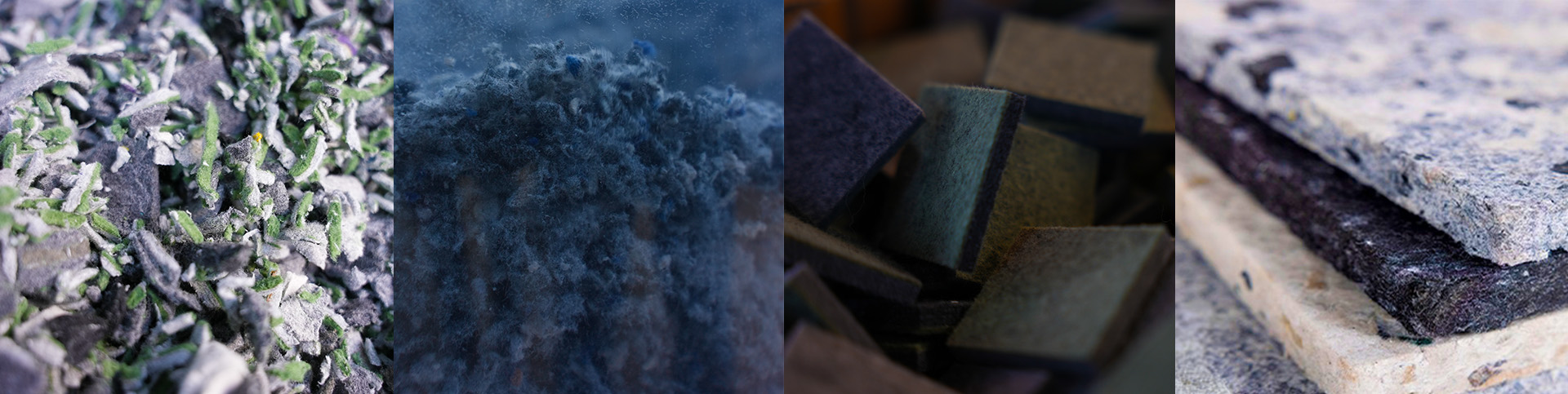
Rethinking Acoustic Production Waste
During the production of acoustic panels, small felt offcuts are inevitably generated. Traditionally, these materials are considered production waste and are often discarded or incinerated.
However, with increasing awareness of circular economy principles, manufacturers and designers are rethinking how such materials can be reused within the design cycle.
Rather than seeing these remnants as unusable by-products, they can be considered valuable resources for developing new materials and surfaces.
From Waste to Raw Material: Zero Brick
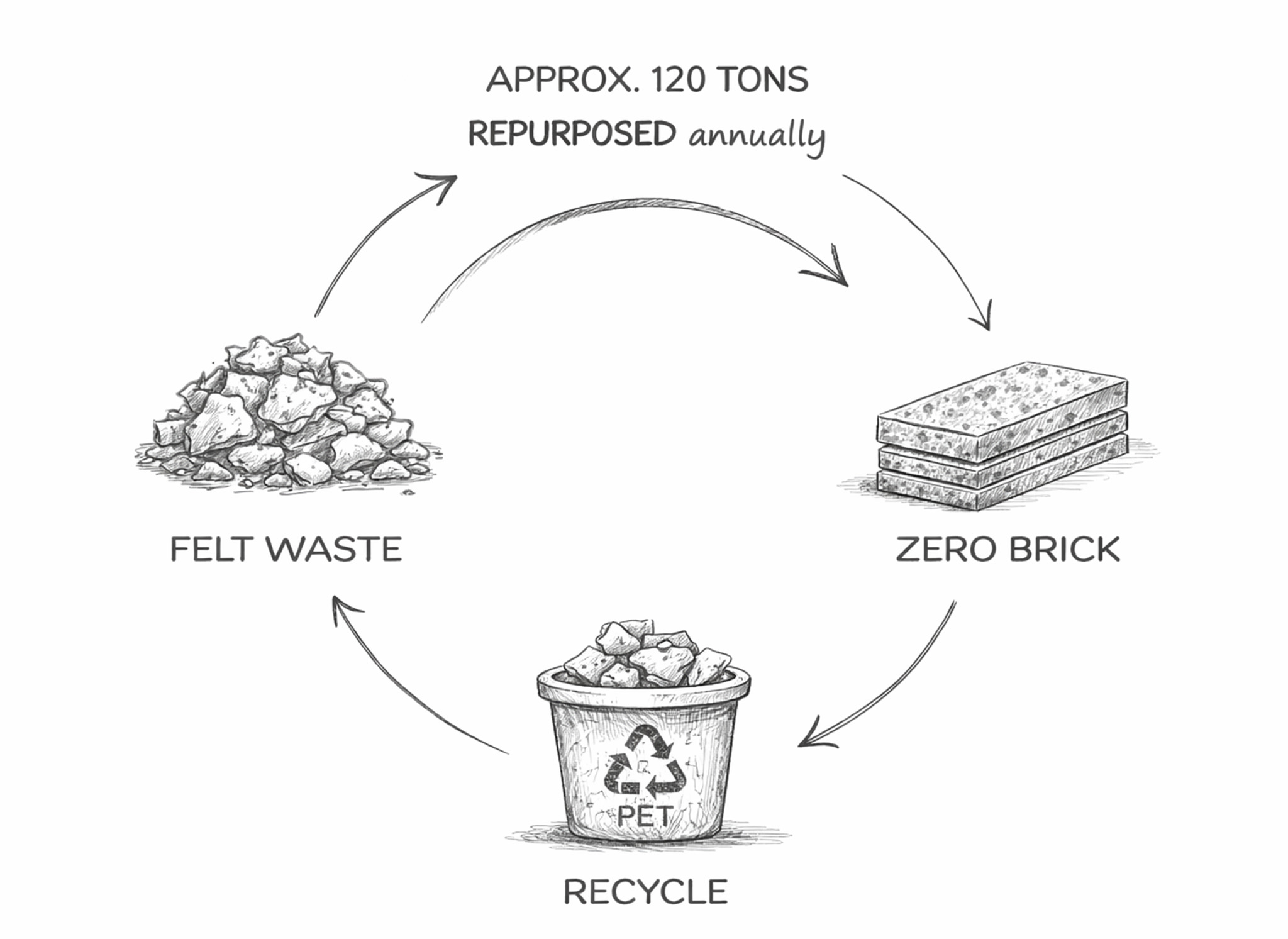
This approach led Feltouch to develop Zero Brick, a material produced entirely from recycled PET felt waste.
Developed as part of the Zero Burn project, Zero Brick transforms felt production leftovers into a new architectural surface without the use of additional binders. Each year, approximately 120 tons of felt waste are repurposed through this process, reducing the need for incineration and supporting a more sustainable production cycle.
The result is a material that combines environmental responsibility with architectural potential.
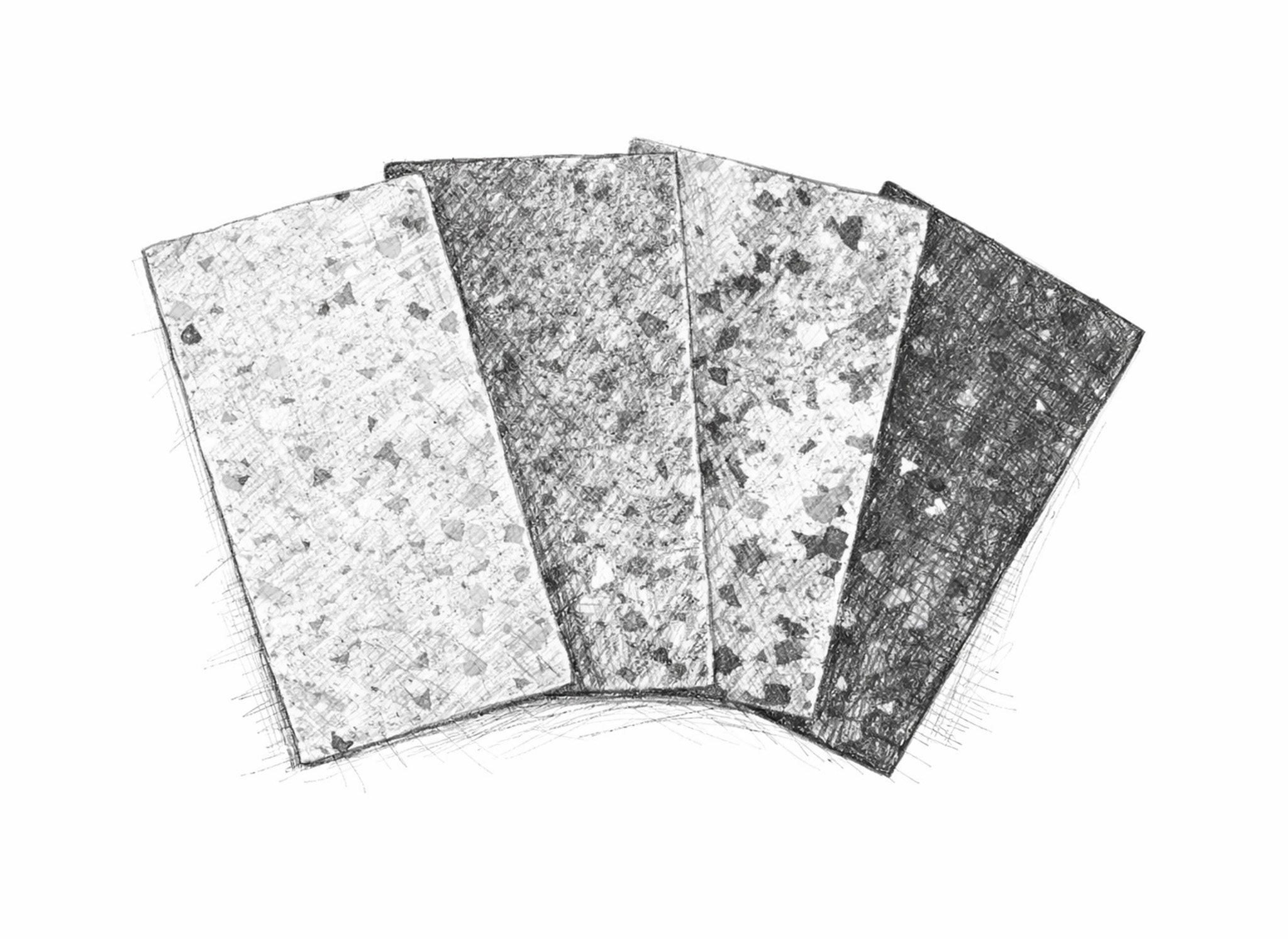
A New Design Expression
Beyond its sustainable origins, Zero Brick introduces a distinctive visual character. The natural mixture of recycled felt fragments creates organic textures and patterns, making each piece slightly unique.
At the same time, the material retains the acoustic qualities of PET felt, helping to control sound reflections and contribute to acoustic comfort in interior environments.
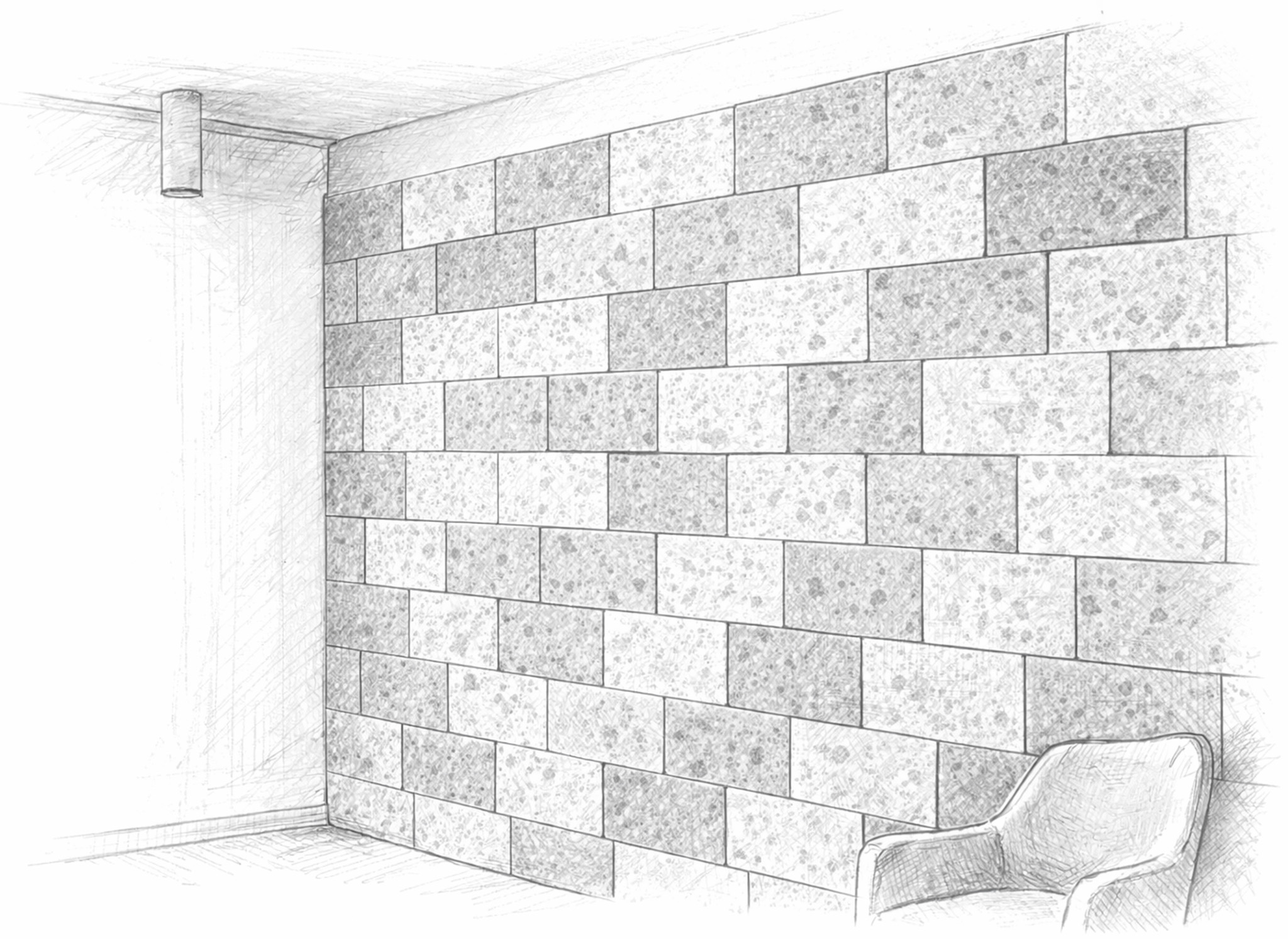
With its brick format, Zero Brick can be applied to wall surfaces to create dynamic compositions that combine material expression with functional acoustic support.
Circular Thinking in Interior Design
Today, sustainable architecture increasingly depends on circular thinking. Designers are no longer only considering how materials perform within a space, but also how they are produced, reused, and reintegrated into future design cycles.
By transforming production waste into a usable architectural material, Zero Brick demonstrates how circular design strategies can reshape the way materials are perceived and used in interior spaces.
So, can acoustic waste become design?
With the right material innovation and circular production approach, the answer is yes.
Zero Brick shows how production leftovers can evolve into a new material language one that supports sustainability while offering designers new possibilities for expressive interior surfaces.