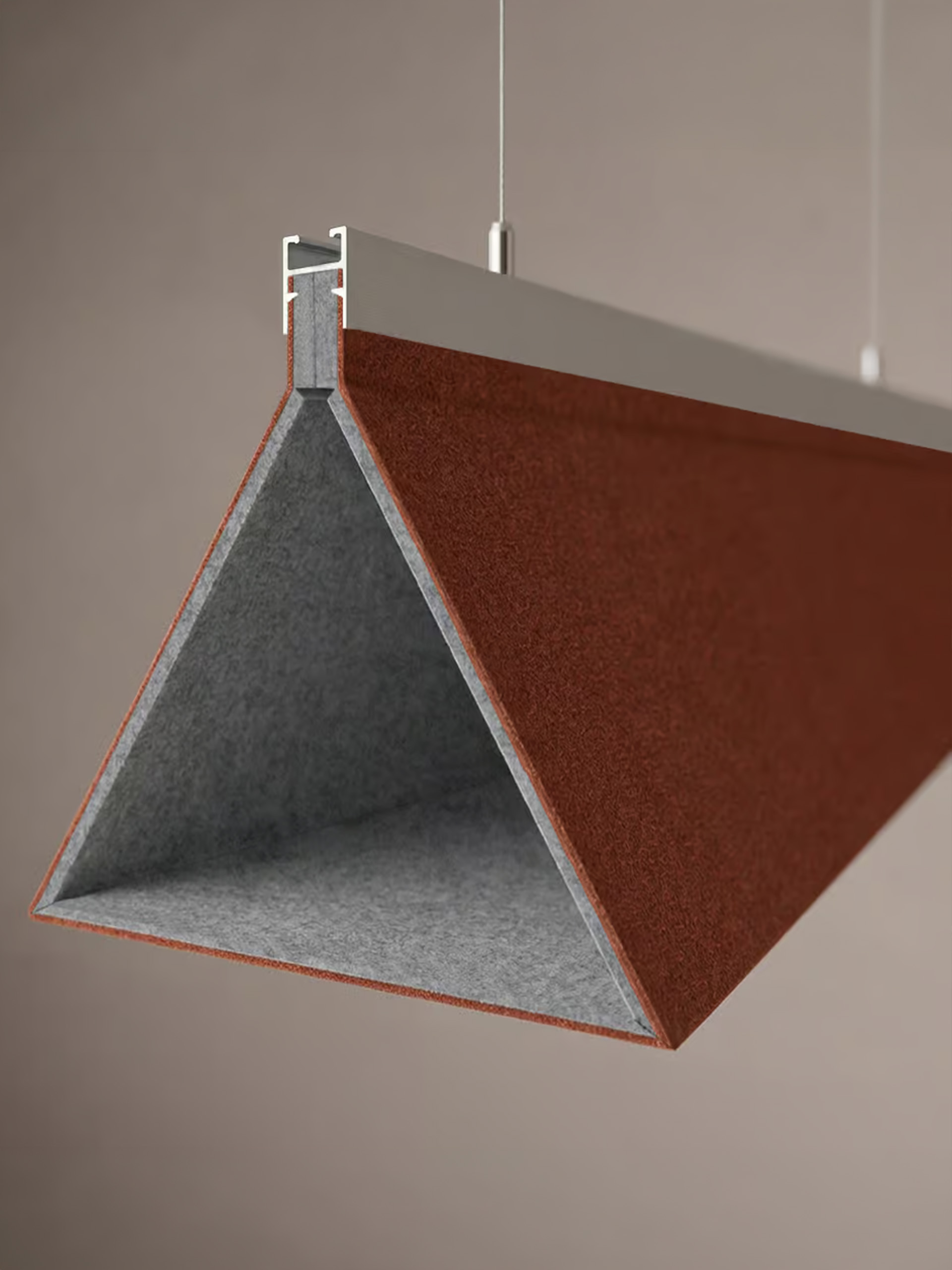
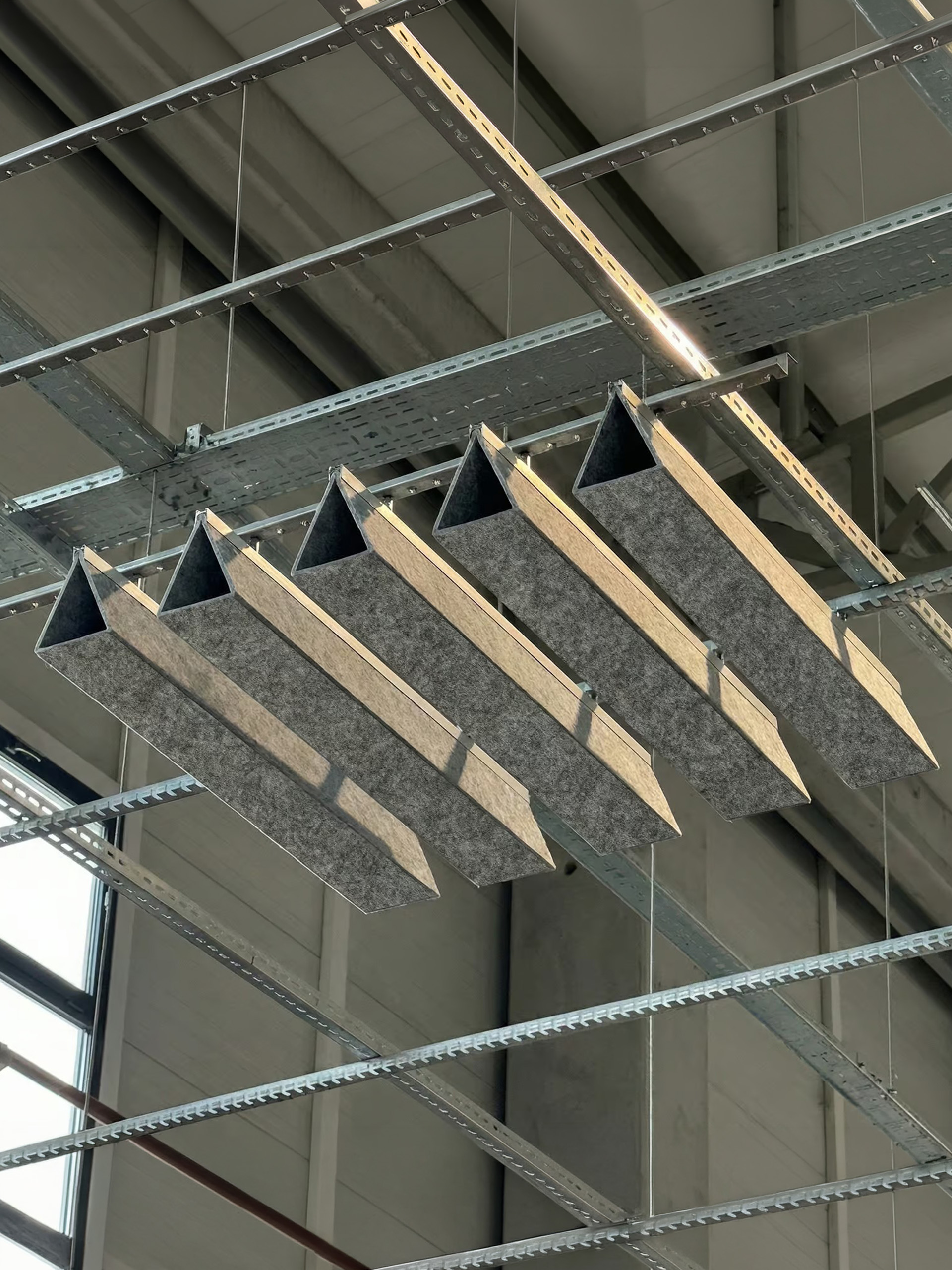
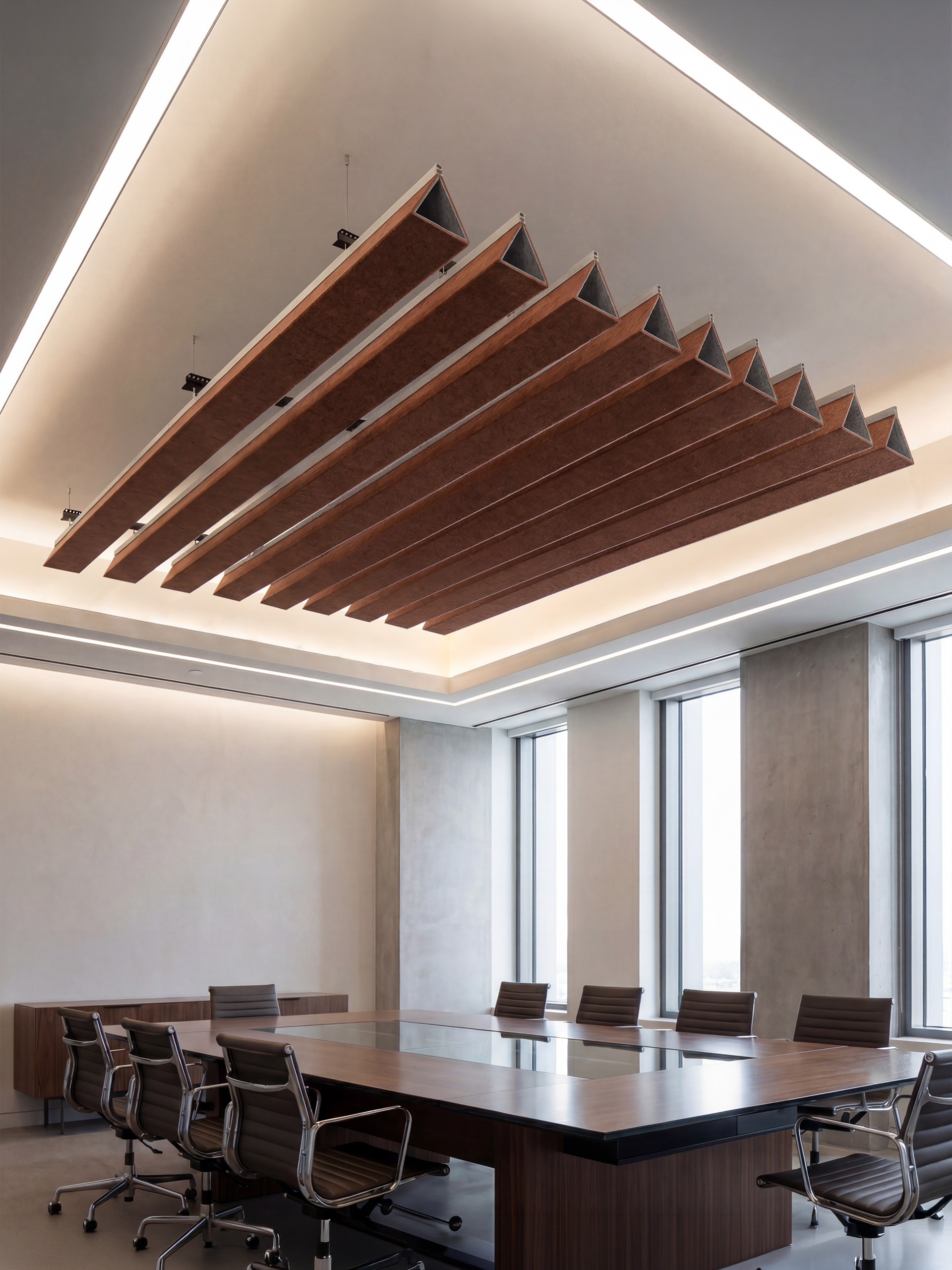
Produced from polyester containing 50% recycled PET, Triangle Baffle supports sustainable design goals while enhancing acoustic performance. Suspended from the ceiling, it absorbs sound effectively, reducing reverberation and improving acoustic comfort in large or open environments. Its modular structure allows flexible spacing and configuration, enabling both uniform and varied ceiling compositions. The lightweight design ensures quick and efficient installation.
Triangle Baffle is ideal for offices, public spaces, educational environments, transport hubs, and large-scale interiors. It delivers a strong visual identity while maintaining high acoustic efficiency.
The product is available in 53 Feltouch PET felt color options, allowing designers to create cohesive or contrasting ceiling compositions tailored to different interior concepts.
Absolutely. Triangle Baffle is manufactured using polyester material containing 50% recycled PET content, making it an environmentally responsible acoustic ceiling solution. The use of recycled materials helps reduce resource consumption while supporting sustainable architecture and green building initiatives.
In addition to its environmental benefits, the product offers long-term durability and reliable acoustic performance. This combination of sustainability, functionality, and design flexibility makes Triangle Baffle an attractive choice for architects and designers seeking responsible material solutions for modern interiors.
Acoustic baffle ceiling systems provide an effective solution for improving sound quality in large and open interior environments. Suspended vertically from the ceiling, acoustic baffles absorb sound waves from multiple directions, helping reduce reverberation and background noise while maintaining an open architectural appearance. Unlike traditional ceiling systems, baffles allow designers to improve acoustic comfort without fully concealing structural or mechanical elements. This makes them particularly suitable for offices, educational facilities, airports, commercial buildings, hospitality projects, and public spaces where both aesthetics and acoustic performance are important. Their lightweight construction, flexible layout options, and modern visual appeal make acoustic baffles a preferred choice in contemporary interior design.
Acoustic baffles reduce reverberation by absorbing sound reflections that would otherwise bounce between hard surfaces such as ceilings, floors, glass partitions, and walls. In large open spaces, excessive reverberation can create uncomfortable noise levels and reduce speech clarity. By introducing sound-absorbing surfaces into the ceiling area, baffles help control sound energy before it spreads throughout the room. This creates a more balanced acoustic environment that supports communication, concentration, and occupant comfort. As a result, acoustic baffles are widely used in open-plan offices, lecture halls, conference centers, transportation hubs, and educational environments.
Yes. Open-plan offices often experience challenges related to speech privacy, background noise, and sound distractions. Acoustic baffle ceiling panels help address these issues by reducing reverberation and controlling sound reflections across large workspaces. This improves speech intelligibility during meetings and conversations while minimizing distractions caused by surrounding activities. In addition to enhancing acoustic comfort, baffle systems contribute to modern workplace aesthetics by creating visually appealing ceiling designs. Their flexibility allows designers to customize layouts that support both functional performance and corporate interior concepts.
Absolutely. Acoustic baffles play a significant role in improving speech intelligibility by reducing the reflected sound that interferes with verbal communication. In environments such as offices, classrooms, conference rooms, libraries, and public facilities, excessive reverberation can make conversations difficult to understand. Acoustic baffles help create a clearer sound environment by controlling reflected noise and reducing echo. This enables occupants to communicate more effectively, enhances collaboration, and contributes to a more comfortable acoustic experience throughout the space.
Triangle Baffle
Designed by Design Team
Triangle Baffle is a linear acoustic ceiling system designed to introduce depth, rhythm, and directional flow to interior spaces. Its triangular folded form creates a sharp, architectural expression while forming a dynamic and repetitive ceiling pattern.
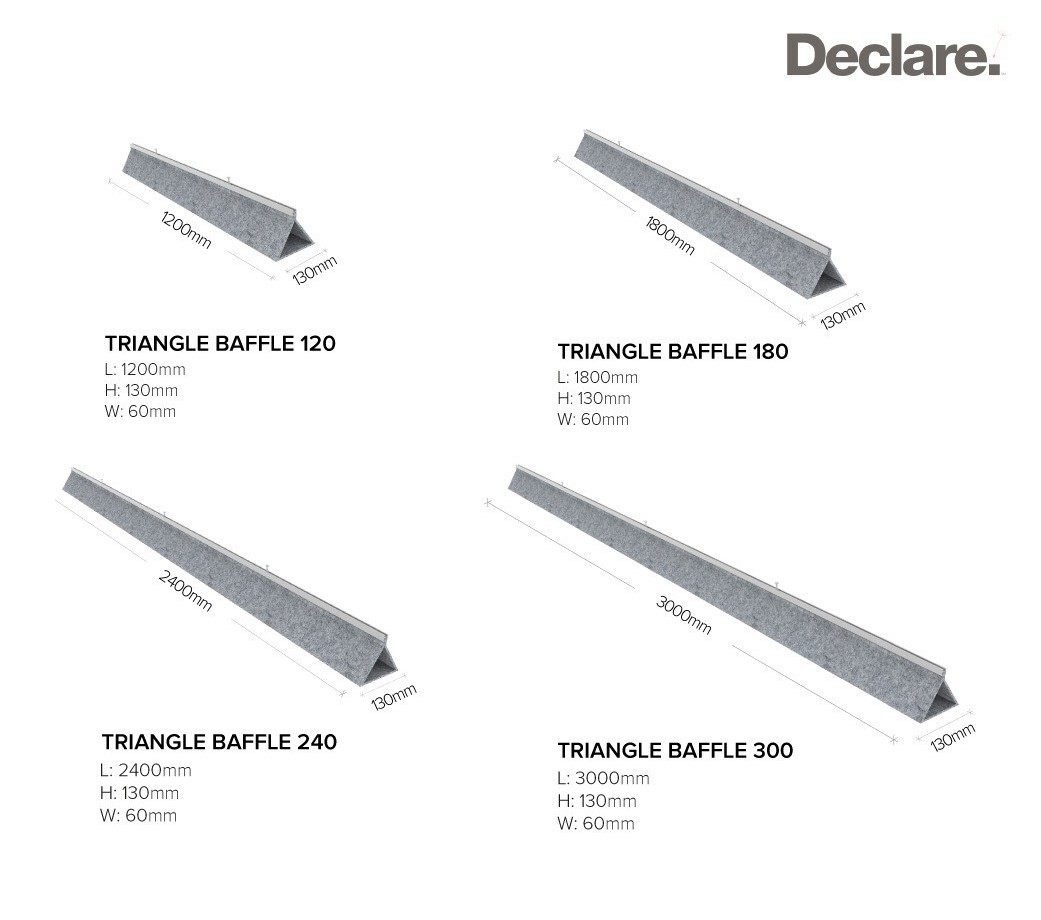
Available Dimensions (mm)