That Plastic Bottle You Just Threw Away? The World Is Turning It Into Something Remarkable.
Recycled PET is quietly showing up in places you’d never expect. Here’s the full picture.
You probably recycled a plastic bottle today. Maybe even yesterday.
Then, you tossed it into the bin, felt good about it for a moment, and moved on.
But have you ever wondered where that bottle actually goes? What it becomes? More importantly, does recycling really make a difference?
The answer is more surprising than most people expect. Today, recycled PET the plastic used in those bottles has become one of the most widely used materials in modern manufacturing.
In fact, it already exists in many parts of daily life. You can find it in clothing, cars, office interiors, packaging, and even the shoes you wear.
So, what exactly is the world creating with recycled PET?
What Even Is Recycled PET?
PET stands for Polyethylene Terephthalate the lightweight plastic used in bottles and food packaging.
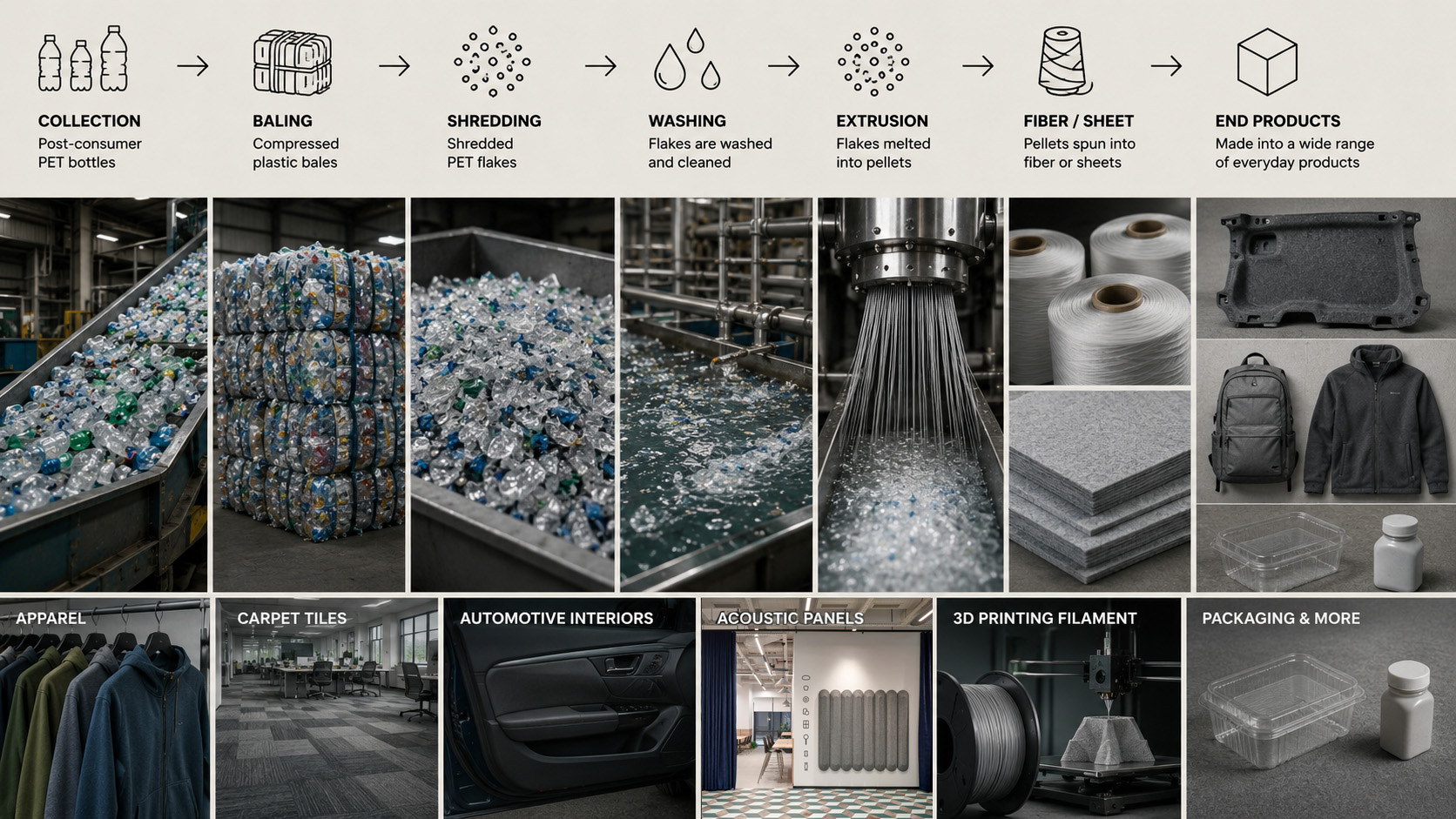
What makes PET important is that it’s highly recyclable. Collected bottles are sorted, cleaned, melted, and transformed into new fibers or raw materials for manufacturing.
The impact is massive: producing just one ton of recycled PET can save around 67,000 plastic bottles from landfills and incineration.
What the World Is Making from Recycled PET
1. The Clothes You Wear
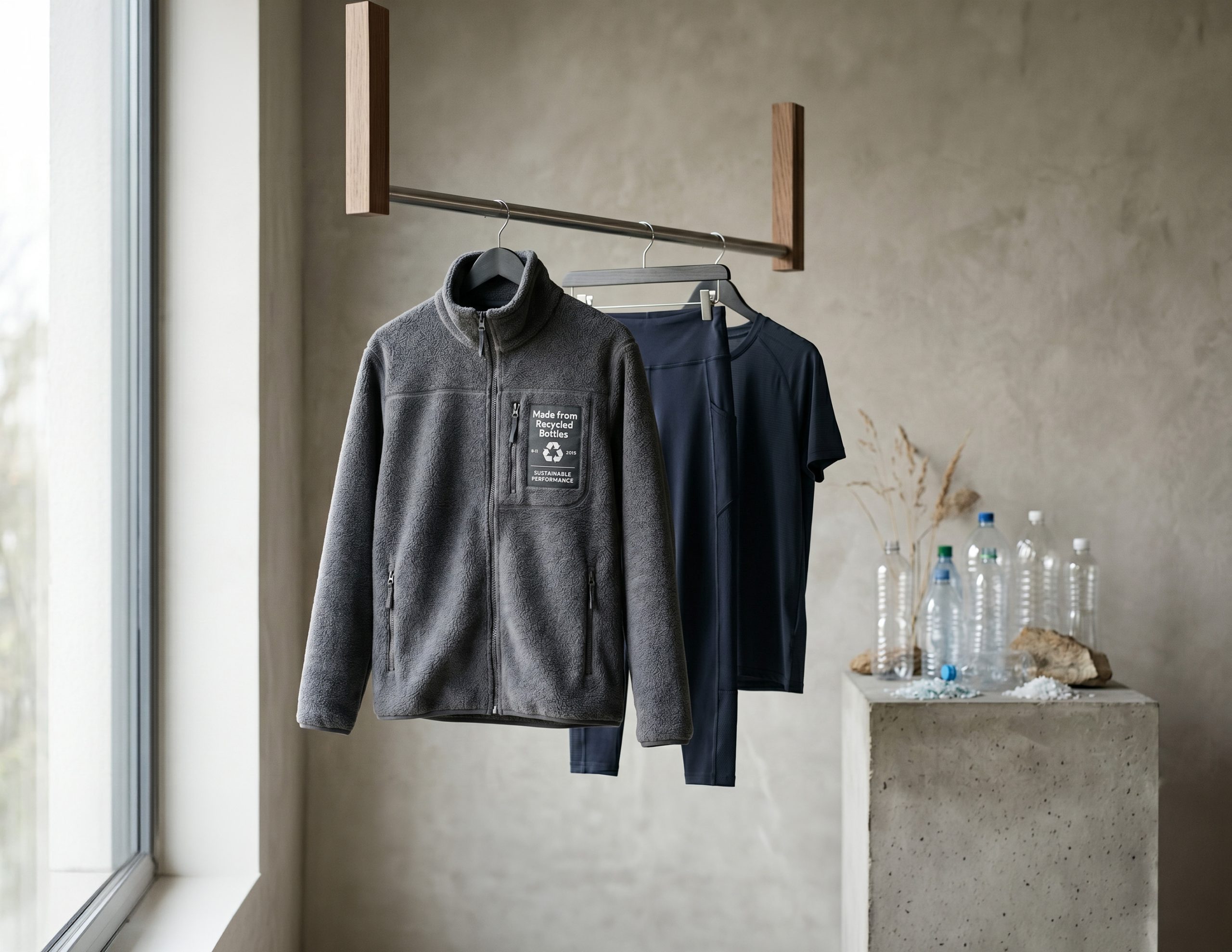
The fashion industry is one of the largest users of recycled PET worldwide. Today, many fleece jackets, T-shirts and activewear collections contain recycled polyester, also known as rPET.
In fact, a large portion of recycled polyester clothing comes directly from post-consumer PET bottles. As a result, brands can reduce plastic waste while maintaining product performance. Major brands such as Patagonia, Adidas, and Nike have used rPET fibers for years.
For example, a single fleece jacket can contain nearly 25 recycled plastic bottles while still delivering the same durability and performance as virgin polyester.
2. The Carpet Beneath Your Feet
One of the largest yet least discussed applications of recycled PET is carpeting.
Today, the flooring industry uses enormous amounts of recycled PET fiber to produce soft, durable, and stain-resistant carpet tiles for offices, hotels, airports, and residential spaces. In addition, major flooring manufacturers such as Interface, Shaw, and Mohawk Industries have expanded their recycled PET product lines significantly.
The reason is simple: recycled PET carpets can offer performance levels similar to virgin nylon and polyester materials while often reducing production costs. At the same time, manufacturers can support sustainability goals more effectively.

3. Inside Your Car
Recycled PET is already present inside many modern vehicles.
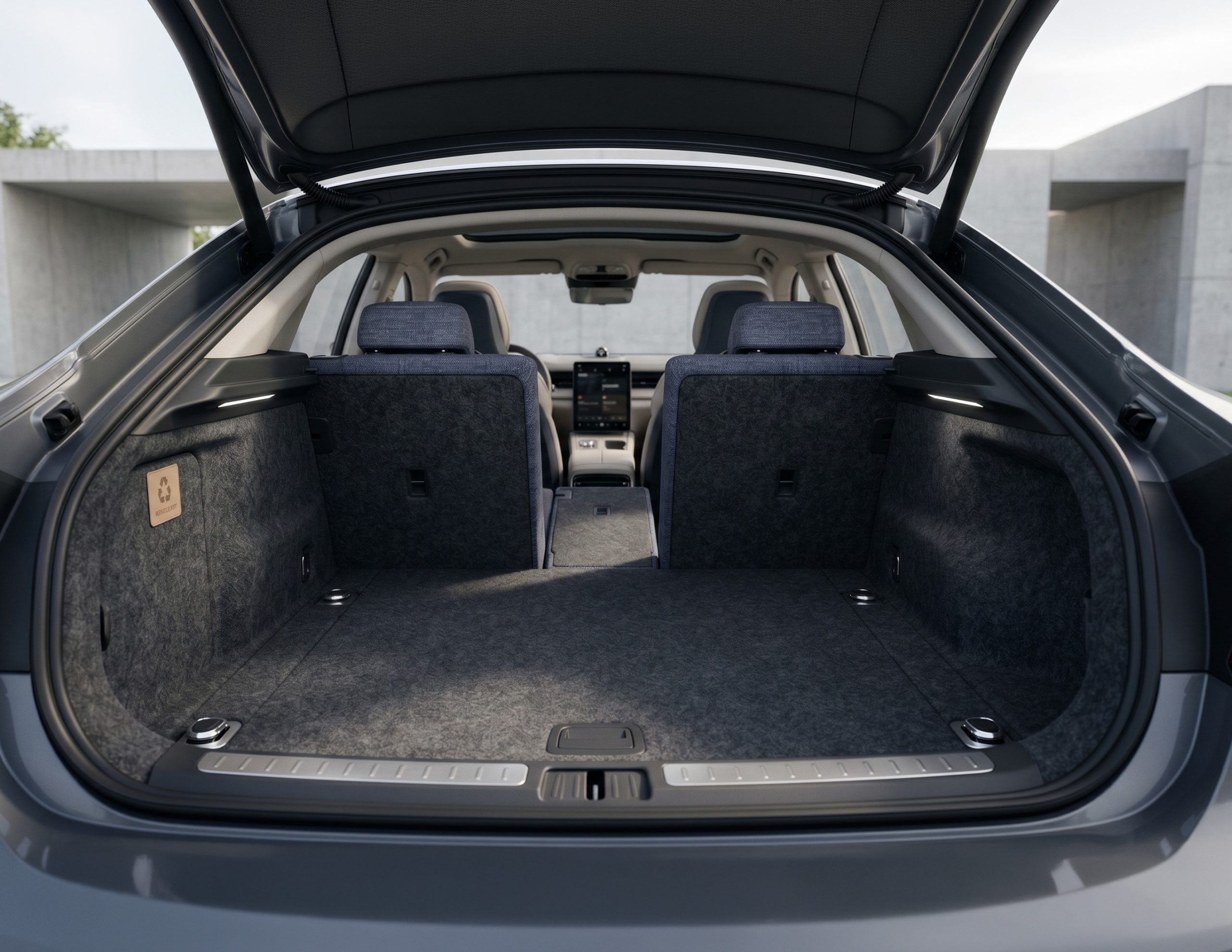
You can find it in trunk liners, seat-back fabrics, insulation layers, carpets, and interior panels.
Over the past decade, automotive manufacturers especially in Europe have increased their use of recycled materials throughout their supply chains.
As a result, recycled PET has become one of the most reliable and traceable material options in the automotive industry. Its durability, consistency, and certification standards make it highly suitable for vehicle interiors.
4. 3D Printing Filament
Recycled PET has also entered the world of 3D printing.
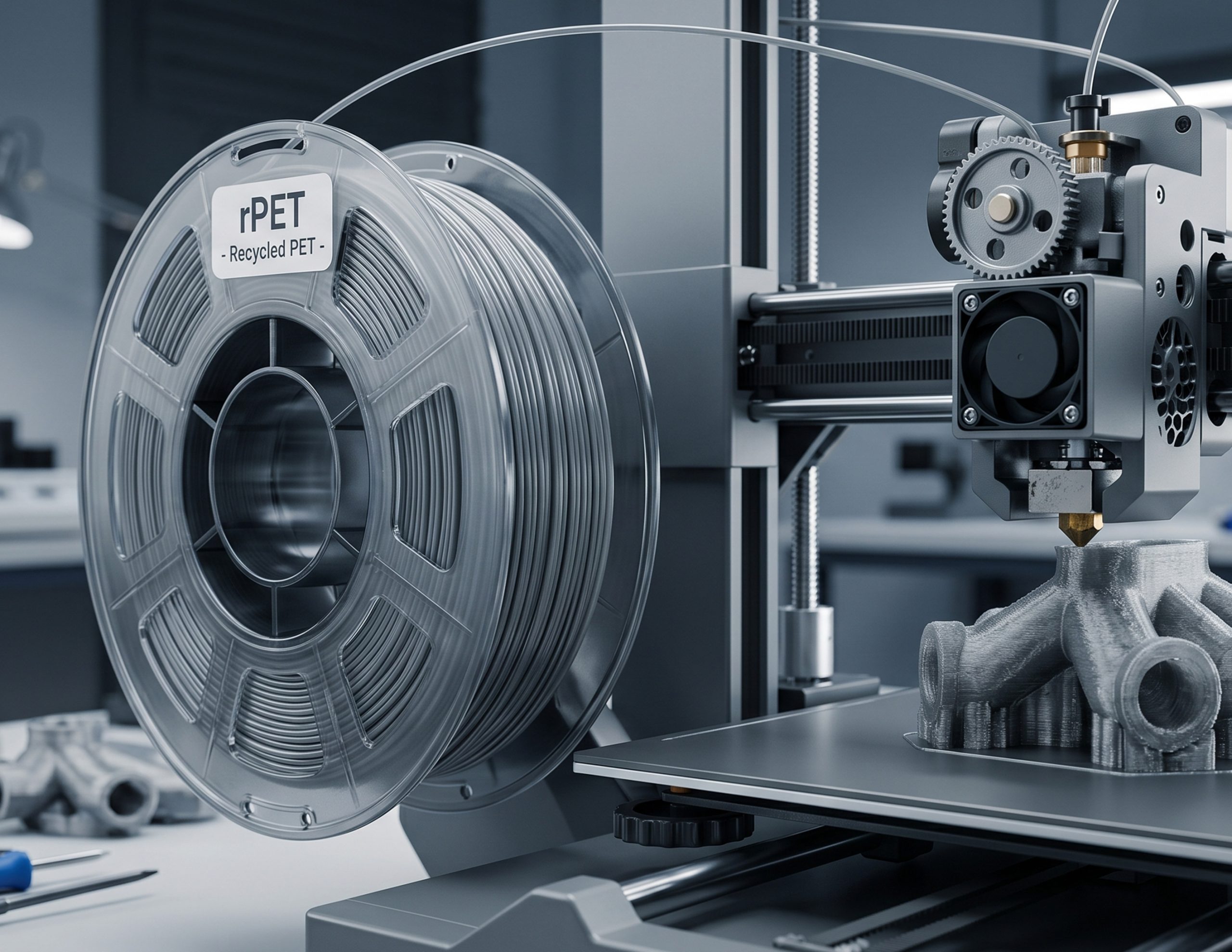
Today, both makers and manufacturers use rPET filament for engineering prototypes, product development, and small-scale manufacturing projects.
One of the biggest advantages of rPET is that it combines the durability and printability of traditional PET with a lower environmental impact.
Although 3D printing is not the largest application for recycled PET in terms of volume, it represents something important. Nevertheless, it demonstrates how far recycled materials have evolved. It shows that recycled PET has reached a level of consistency and reliability trusted even in precision manufacturing environments.
5. The Bigger Picture : Recycled PET
Recycled PET isn’t a niche material for sustainability-conscious brands. It’s a mainstream industrial material used at scale across fashion, automotive, construction, flooring, packaging, and manufacturing worldwide.
What’s changed in the last decade isn’t just the volume it’s the quality. Recycled PET is no longer a compromise. The production technology has improved to the point where recycled content performs at parity with virgin material across most applications. The certifications GRS (Global Recycled Standard), OEKO-TEX, and others have made it verifiable and trustworthy in professional supply chains.
The reduce, reuse, recycle principle used to live mostly on posters. Now it lives in the supply chains of the world’s largest manufacturers.
And Then There’s What Feltouch Does with It
All of those applications above clothing, carpet, packaging, cars share one thing: they use recycled PET to make something better than what came before.
That’s exactly the principle behind Feltouch.
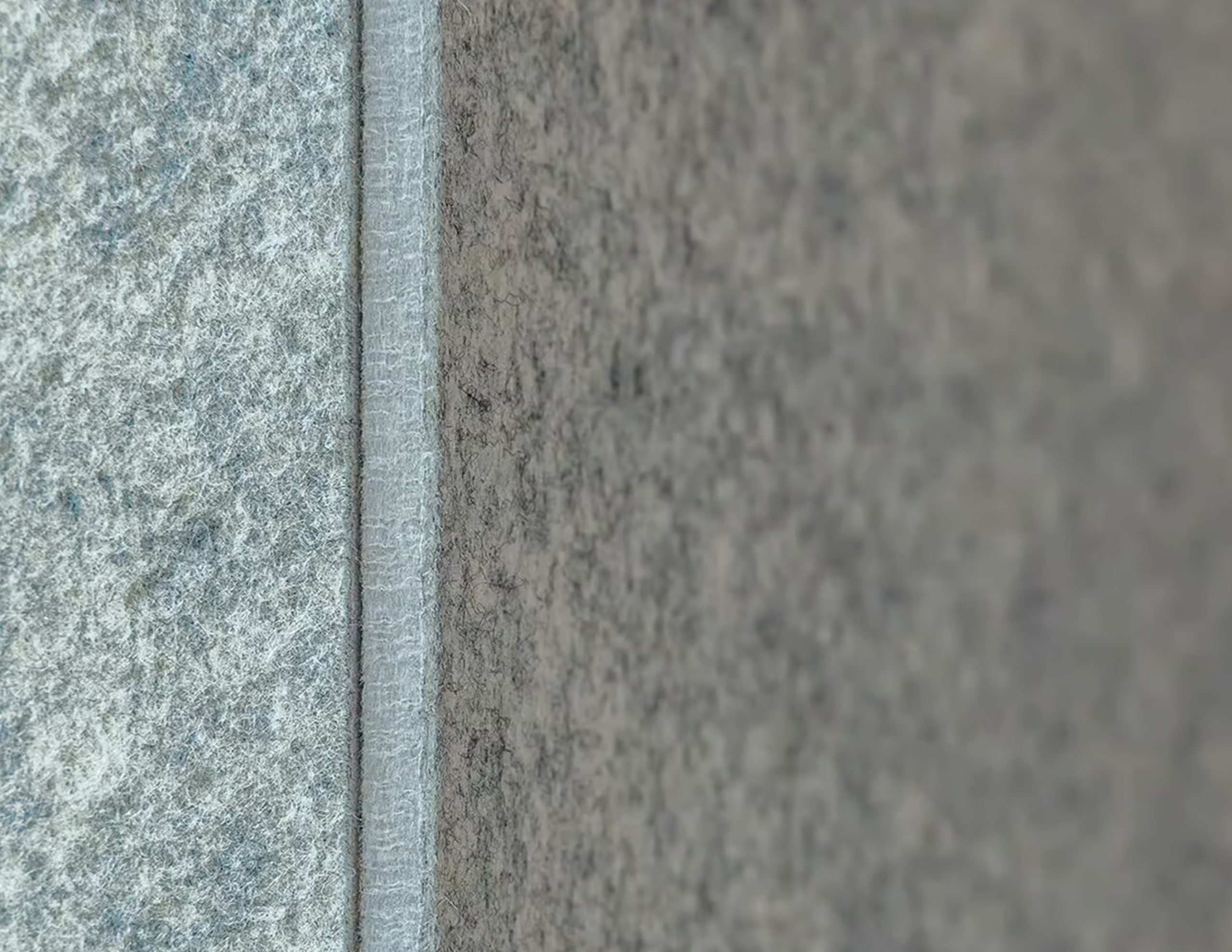
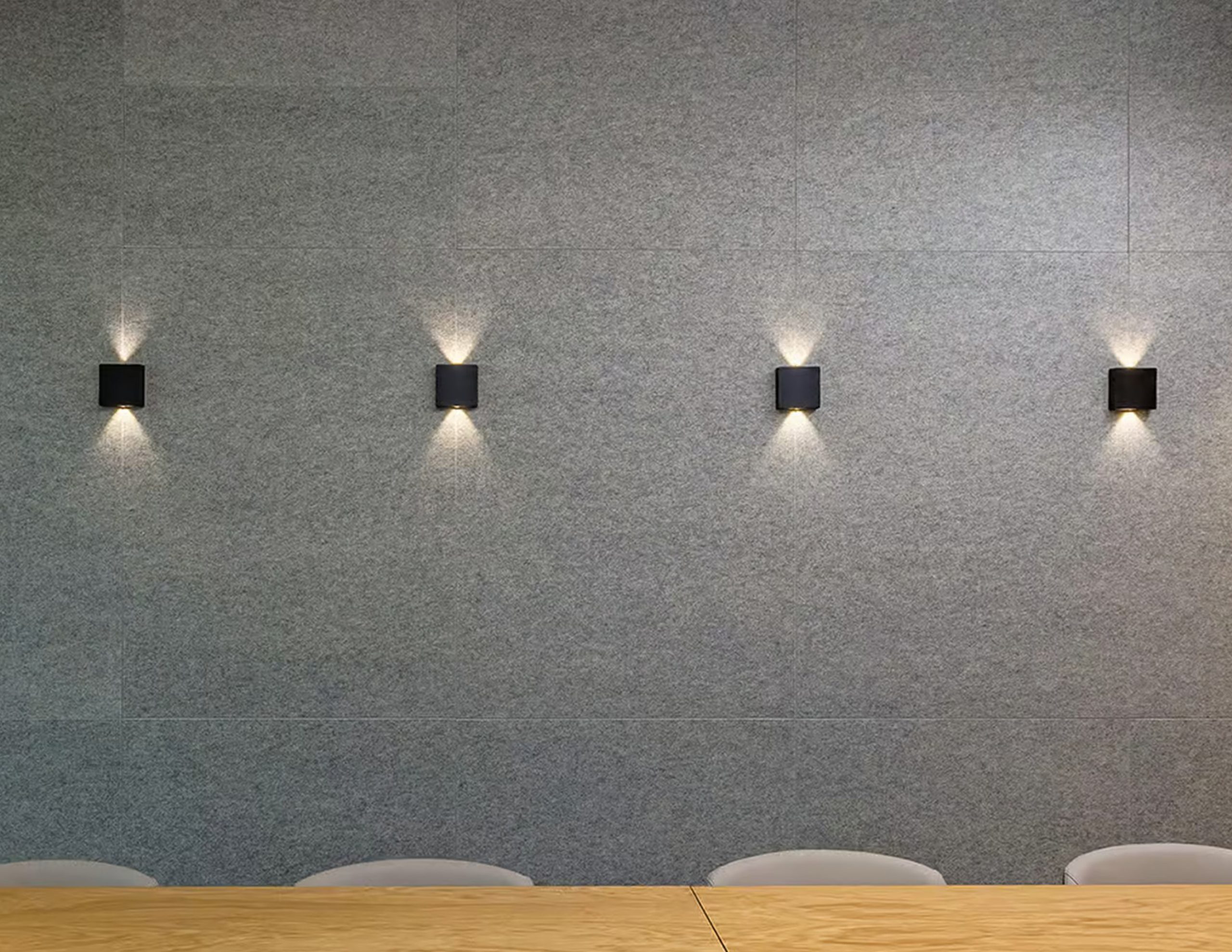
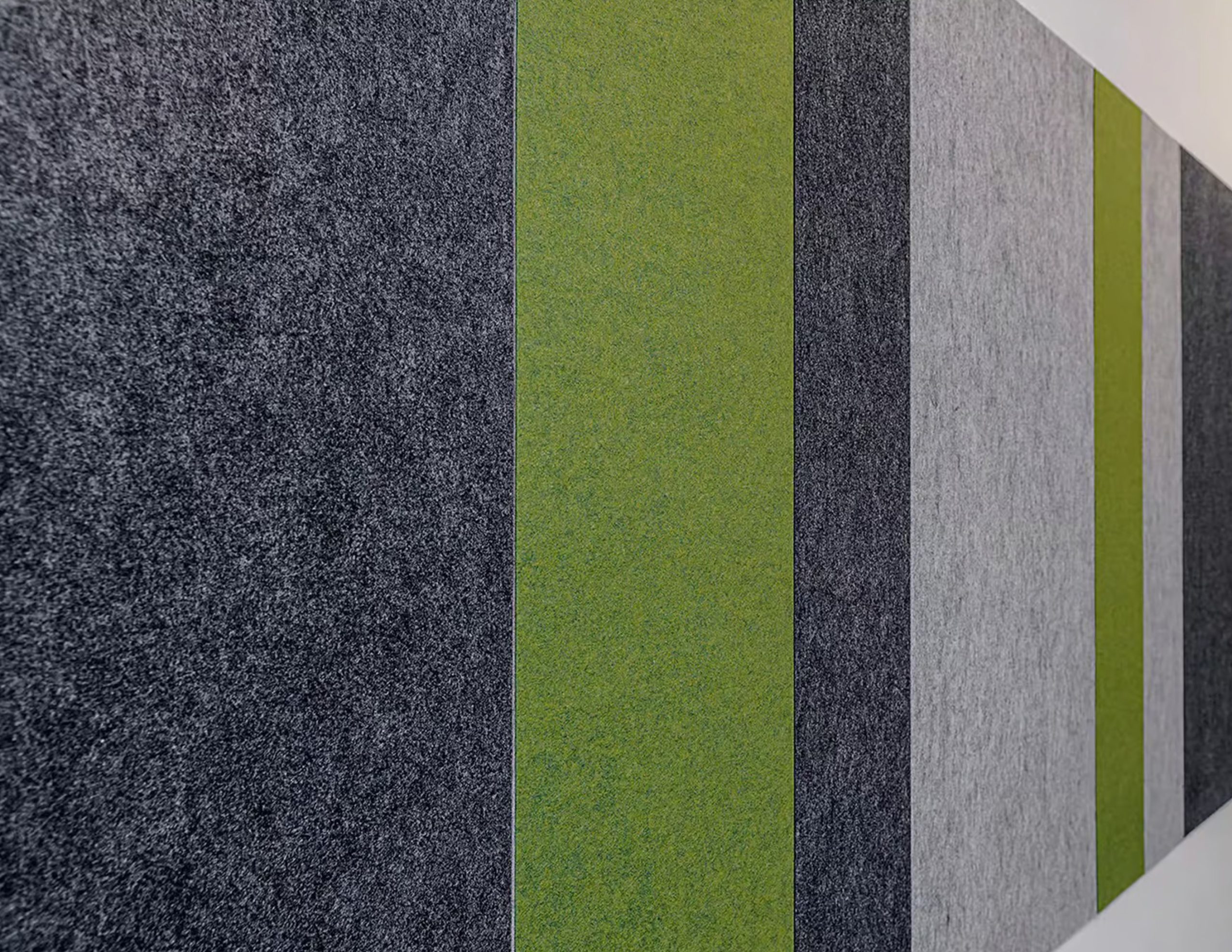
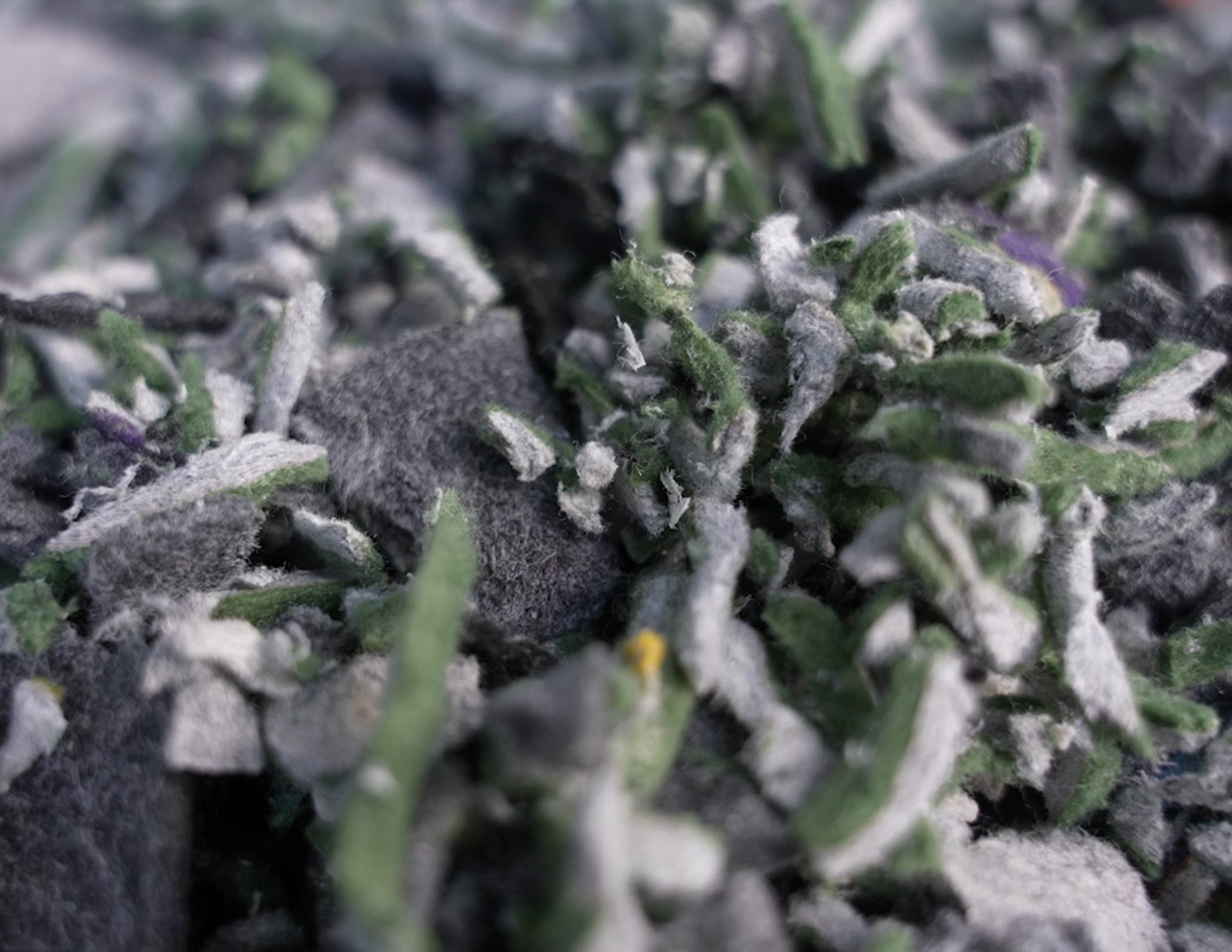
Feltouch is a production and product development company focused on PET felt solutions, built on advanced fiber and nonwoven textile technology. We design and manufacture acoustic panels made from 50% recycled PET panels that absorb sound, transform interiors, and are built from a material with a verified second life.
Our panels go into offices, hotels, schools, healthcare spaces, and public buildings. We work directly with architects, interior designers, and facility managers developing solutions that are tailored to the specific acoustic and aesthetic needs of each space, not pulled from a generic catalog.
The goal is always the same: interiors where people think more clearly, communicate more easily, and simply feel better.